What is a block reward?
What you actually earn when a block is found: the subsidy, the transaction fees, and how Quantus emission changes over time.
Two parts to every reward
A block reward has two components: the block subsidy (newly issued coins the protocol creates for that block) and the transaction fees of every transaction the block includes. Whoever produces the block collects both. On a pool, that combined reward is what gets split among the round's contributors.
How the subsidy changes over time
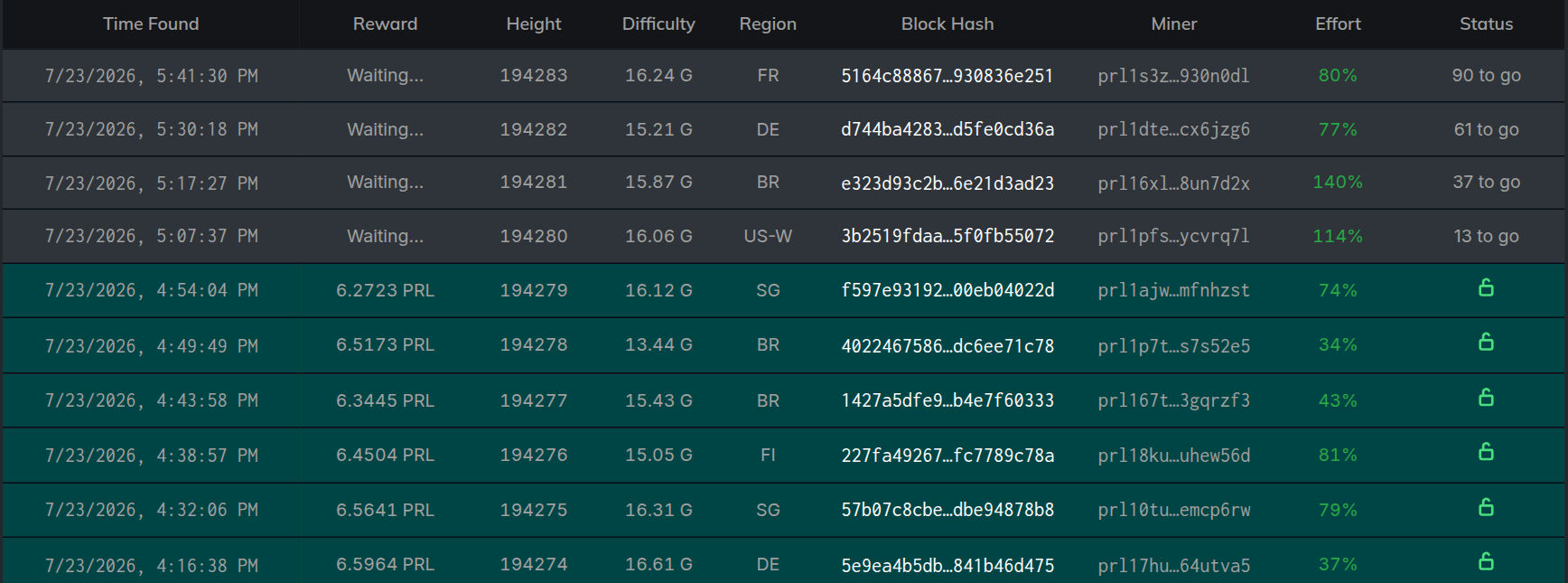
Most coins reduce the subsidy as the chain grows, to cap or slow new supply. Bitcoin does this in sudden halvings. Quantus has no halvings: every block pays the remaining unmined supply divided by 50,000,000, so the reward shrinks a little with every block, toward a fixed cap of 21,000,000 QTC.
Why fees matter more over time
As the subsidy shrinks, transaction fees become a larger share of the reward. Early on the subsidy dominates; later, fees carry more of the weight. Either way, the miner who finds the block collects whatever fees the transactions in it paid.
From reward to your balance
When the pool finds a block, its reward first shows as pending while the network confirms it. Once it matures, your reward for the round (minus the pool fee) is credited to your balance, ready for the next automatic payout.
Under PPS+ the order is reversed. You are credited for each accepted share as you submit it, out of the block subsidy the pool keeps back, and the block itself then adds only its transaction fees on top. Solo is unaffected either way: a solo finder takes the whole block and is never paid per share.