




Rented hashrate and Quantus: what works
Why NiceHash cannot sell Quantus hashrate, which GPU rentals work instead, how to check one pays, and the step never to skip.
Can I buy Quantus hashrate on NiceHash?
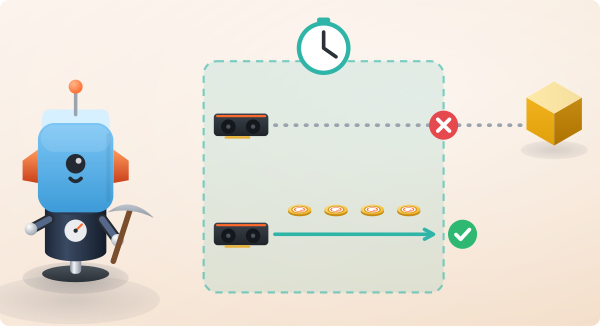
No. Quantus is mined with the quantus algorithm, and NiceHash only sells hashpower for the algorithms on its list.
On 18 November 2026, neither NiceHash's algorithm list nor MiningRigRentals offered quantus.
So treat any offer of "Quantus hashrate" on such a marketplace with suspicion.
What rented power does work for Quantus?
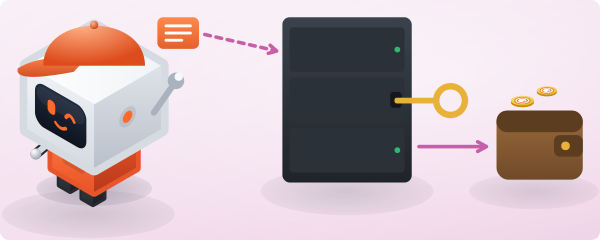
Renting a whole machine works. You rent the computer by the hour, install a Quantus miner yourself, and point it at the pool with your own address.
Quantus runs on NVIDIA, AMD and Intel GPUs, and support differs from miner to miner. The Quantus miners overview lists which miner runs on which card.
Three services rent such machines, and each has its own guide here:
- On Clore.AI, you rent servers from individual hosts, with cheaper spot orders that can be outbid.
- On vast.ai, you rent servers from hosts and datacenters, billed by the second.
- On SaladCloud, you rent containers on gaming PCs in homes around the world.
How do the three services compare?
| Service | What you rent | Billing | What can stop the rental | The IP the pool sees |
|---|---|---|---|---|
| Clore.AI | A whole server from one host | Per minute, priced per day | A higher bid, on a spot order | The server's |
| vast.ai | A container on a host's or a datacenter's server | Per second, plus storage while stopped | A higher bid, on an interruptible instance | The host's, shared with other renters |
| SaladCloud | A container on a home gaming PC | Per second, per GPU-hour | The PC going offline, or higher-priority work | Each home PC's own |
Each guide covers the setup steps, the costs and the rules of its own service.
Why do many rented machines need a proxy?
Every rented machine connects from its own IP address, often in its own country. Dozens of them on one wallet look like a botnet, a network of hijacked computers.
So send them through one mining proxy that you run. The pool then sees one connection from one place.
The article on why a wallet on many IPs is flagged explains the reasoning, and what to do if it already happened.
Will renting a GPU machine pay off?
Rented machines are priced by the hour. So the question is whether the coins you earn outrun the rent. Check it before you rent:
- Open the Quantus mining calculator.
- Enter the hashrate of the GPU model you would rent.
- Compare the estimated earnings for a day with 24 hours of rent.
The estimate moves with network difficulty and the coin price. A margin that is thin today can be negative tomorrow.
Should I mine pool or solo with rented power?
A short, large rental is the one case where solo mining can tempt you. It is a burst of hashrate hunting whole blocks.
Before you commit, open the Quantus solo mining calculator. It shows the median time to a block for the rented hashrate.
If the rental is shorter than several times that median, pool mining pays far more predictably.